Why Do I Feel Resentful When I Help Other People?
You helped because you wanted to. At least, you thought you did. Perhaps you gave someone your time. Took on an extra task. Listened while they talked through a problem. Changed your plans to accommodate them. Did something thoughtful without being asked. And now, instead of feeling good about helping, you're feeling resentful.
Maybe you're irritated that they haven't thanked you properly. Perhaps you're wondering why they couldn't have done it themselves. Maybe you're noticing that they always seem to need something from you. Or perhaps you're simply exhausted and wishing you'd never offered in the first place.
And then another layer appears:
“That's horrible. I shouldn't feel resentful. I chose to help.”
But what if the resentment isn't something you need to judge or immediately get rid of? What if it contains information that could help you understand yourself, the other person or the relationship a little better?
What is resentment trying to tell you?
I see emotions as messengers. That doesn't mean I believe every emotion gives us an objective description of what is happening around us. Feeling angry doesn't automatically mean somebody else has done something wrong. Feeling afraid doesn't necessarily mean we are in danger. And feeling resentful doesn't automatically mean somebody has taken advantage of us.
But the emotion tells us that something is happening within us. And when the feeling within feels uncomfortable, I view that as an invitation to explore more deeply.
The sensation of resentment that we later feel could be appearing because our mouth said “yes” while an inner part of us was saying “no”.
That's one possibility, but it isn't the only one. Perhaps you genuinely wanted to help but gave more than you had available. Maybe you were hoping that your generosity would be reciprocated. And it could be that this isn't about one favour at all, but the latest example of a pattern that has been happening for years. On the other hand, perhaps somebody really has crossed a boundary and your resentment is drawing your attention towards something that needs to change.
So, rather than deciding what resentment means before we've explored it, how about starting with a question?
“What is this feeling trying to show me?”
And, as you ask yourself this question, go right back to the conversation that started the chain of events. Let’s say it was a conversation in which someone asked you to help them out in some way. What happened in the moment that you said “yes” to them?
If you were to be really honest with yourself, how present were you in that moment? A lot of the time we’re so busy that we rush through life without pausing to stop and think. And that can mean that things like this happen: Someone says, “could you just do x?” and, out of habit, you just say, “yes, of course”, without tuning in to feel whether you really wish to agree.
But ten minutes later, you’re inwardly cursing because there is no way on earth that you willingly desire to do that thing, and then you’re full of resentment for the other person and inner rage at youself.
If that's what happened, perhaps the resentment isn't really about helping. Could it be highlighting the fact that you weren't including yourself and your true needs in the decision?
Now, I’m not trying to say that we should only ever help when we feel enthusiastic about it. As we explored in the previous article, sometimes I may not particularly want to do something, but consciously decide that doing it matters to me, so I’m willing to accept whatever inconvenience may arise in the process. I have made a conscious choice.
In other words, there is a significant difference between choosing to inconvenience yourself for somebody you care about and automatically sacrificing your own needs because you never had the experience of being permitted to say no.
Were there hidden conditions attached to your yes?
Now let's consider another possibility: Imagine that you did genuinely want to help. You made the decision consciously. You had the capacity and nobody pressured you. And yet resentment still appeared afterwards. What else might be happening?
Perhaps there was an expectation attached to your help that was never actually spoken.
“Of course I'll help you today, because I know you'd do the same for me.”
“I'll listen to everything you're going through because you'll be there when I need somebody.”
“I'll take care of this because you'll appreciate how much effort I've made.”
There is nothing inherently wrong with wanting relationships to contain reciprocity, appreciation or mutual support. But difficulties can arise when the agreement exists only inside us.
The other person may believe they received a freely offered gift while we believe we've participated in an exchange. And then, when the imagined other half of the exchange doesn't arrive, resentment may begin to appear.
Again, that doesn't tell us who is right or wrong. It invites us to ask more questions.
· Did I communicate what I needed?
· Did the other person actually agree to what I expected from them?
· Am I giving in ways that I secretly hope will ensure somebody gives back?
· Would I still have chosen to do this if I knew there would be no thanks, no favour returned and no change in how this person behaves towards me?
That process might feel uncomfortable, but perhaps resentment is here to offer us an opportunity to explore. And the more genuinely self-aware we can become, the more authentic we are both with ourselves and with others.

Are you giving more than you actually have?
There is another possibility that can be particularly relevant for those of us who like to be helpful. And it’s a very common cause of burnout or chronic fatigue. The problem isn't that you didn't want to give - you simply gave more than your capacity. Or, to put it another way, you gave from your essential supply of energy, rather than from your overflow.
You might genuinely want to support a friend and still not have the capacity for a two-hour telephone conversation. You might want to help a colleague without taking responsibility for completing their work. You might love your family deeply while recognising that continually putting everybody else's needs ahead of your own is leaving you exhausted.
Our desire to help and our capacity to help are not necessarily the same thing. And perhaps resentment might be trying to draw our attention to the gap between them.
This could invite another set of questions:
· What did I actually have available to give?
· At what point did helping begin to feel draining?
· Could I have offered something smaller?
· Did I believe that saying “I can help for half an hour” wasn't good enough?
· What might have happened if I had acknowledged my own limits as well as the other person's needs?
· What if somebody really is taking advantage of you?
There is a risk, when we become interested in self-awareness, that we turn every uncomfortable experience into something we need to resolve inside ourselves. That may be helpful in this example as it may lead us to look at how we can increase our energy by adding more things that fulfil us into our life.
At the same time, I don't think that's always appropriate to just assume we are the problem. Sometimes another person's behaviour really doesn't work for us. Some relationships do become (or always were) one-sided. Sometimes we repeatedly communicate a boundary and somebody repeatedly ignores it. The resentment isn’t inviting us to take responsibility for that – in this case, it’s more likely inviting us to notice a boundary infringement.
Our boundaries tell us – and others – what we are or what is ours, and what we are not or what doesn’t belong to us. The purpose of this is to create safety. So, resentment may sometimes invite us to look not only inwards, but also at what is happening between us and another person. And if this is what you are noticing in your specific situation, then I invite you to explore the last article in which we looked at learning how to determine your authentic “yes” rather than a habituated “yes”.
What if you resent someone who never asked for your help?
Here we arrive at an interesting possibility. What if the other person didn't actually ask you to do all of this?
Perhaps you anticipated what they needed and stepped in. Maybe you fixed the problem before they even realised there was one. Perhaps you regularly take responsibility for making life easier for everybody around you. Then one day you notice yourself thinking:
“Why am I always the one who has to do everything?”
That's a fascinating question if you notice you are persistently taking action or fixing things when nobody actually asked you to. I'm not suggesting this means the other people involved have no responsibility. Nor does it mean your help wasn't valuable or appreciated. But perhaps there is something here to become curious about.
What happens if you don't step in?
Is it difficult to watch somebody struggle?
Do you feel responsible for preventing discomfort?
Does being needed give you a sense of value or belonging?
Do you trust other people to find their own solutions?
And, perhaps most interestingly, what might become possible for you if you stopped using so much of your energy managing things for everybody else?

How can Orange help you explore resentment?
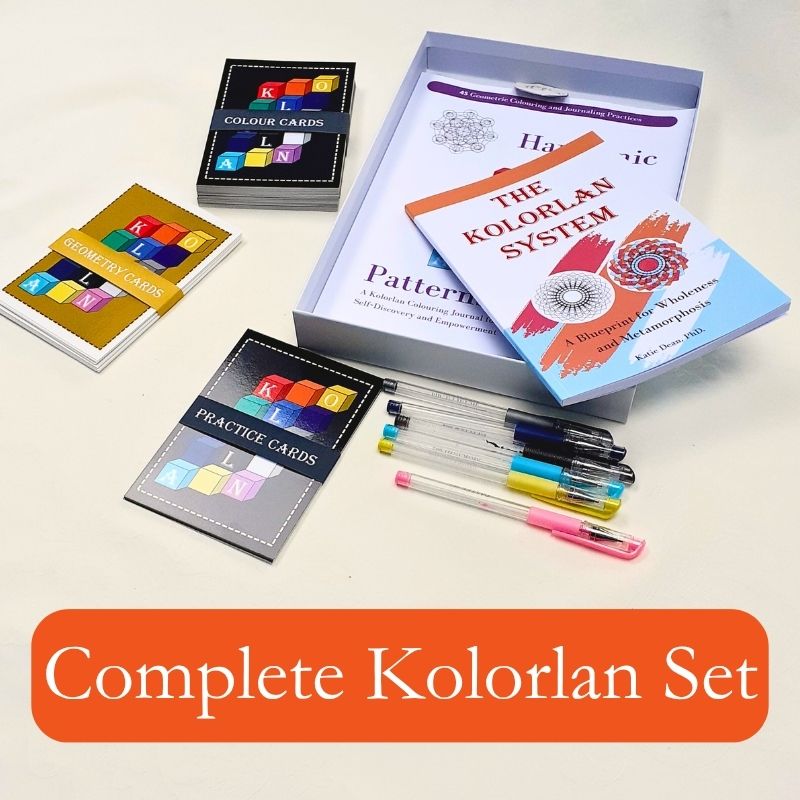
Within the Kolorlan System, all of the colours play a role in helping us to become more deeply attuned to our needs, wants, patterns and so on. But today, let’s look at how Orange might support you as you explore some of the patterns that might sit around resentment.
Orange can help you connect with and understand all your emotions. Rather than categorising resentment as a “bad” emotion that needs to disappear, Orange invites us to become interested in it.
· What does the resentment feel like?
· When did it begin?
· What happened immediately before it appeared?
· What do you wish you had done differently?
· Is there something you want that you haven't acknowledged?
· Is there something you need to communicate?
Perhaps your resentment leads you towards Red and the discovery of a boundary that needs attention. Perhaps it reveals sadness, disappointment or fear underneath. Maybe it shows you that you need more rest, more reciprocity or simply more space. And if it has shown you that there is something you need to communicate, then you could turn to blue for support with that.
Orange may also show you something entirely different. You see, the Kolorlan colours aren’t here to proclaim what your resentment (or any other experience) means. They are designed to create an opportunity for you to listen to your own experience and discover what feels true for you.
You don't have to stop being helpful
If you recognise yourself throughout this article, you might be wondering whether the answer is to stop doing so much for other people. There is no clear answer to that. Again, it is individual.
It may be that generosity is a fundamental part of who you are. Perhaps supporting other people brings enormous meaning and joy into your life. There may be plenty of occasions when you willingly give your time and energy and feel absolutely no resentment afterwards.
So, the invitation here isn't necessarily to give less. It is to become more conscious of your giving.
· Did I choose this?
· Do I have the capacity for it?
· Am I expecting something that I haven't communicated?
· Is there a boundary I need to acknowledge?
· Or is my resentment showing me something else?
Once you have that information, you get to decide what you want to do with it. You may decide to change something. Or perhaps you realise you need to have a conversation with the other person. Maybe you just say no next time. Perhaps you recognise that the relationship needs to change. Or you might realise that, even knowing everything you now know, you would make exactly the same choice again because it’s still the right choice for you.
I'm not suggesting that resentment is appearing so it can make the decision for you. In invite you to see it more like another signpost helping you to ask questions and come to understand yourself a little more clearly. And, as you reach that understanding, you gain the ability to live more fully in alignment with your truth, and that often equates to experiencing more energy because you start to deeply honour your energy, your capacity and your needs.