Why Do I Say Yes When I Really Want to Say No?
Have you ever agreed to do something and then wondered, almost immediately, “Why on earth did I say yes to that?”
Perhaps somebody asked you for a favour and “yes, of course” came out of your mouth almost automatically. Maybe you agreed to attend something you really didn't want to attend. Or perhaps you found yourself taking responsibility for yet another task when you were already exhausted and had promised yourself you weren't going to take anything else on.
Then, there are those times when we’re not even really thinking and someone says, “could you just do x?” and, out of habit, we just say, “yes, of course”, without tuning in to feel whether we really wish to agree.
But ten minutes later, we’re inwardly cursing because there is no way on earth that we willingly desire to do that thing, and we’re full of resentment for the other person and inner rage at ourselves.
So, what happened?
If you didn't want to do it, why did you say yes?
Perhaps you weren't really making a decision. We tend to think of yes and no as decisions. Someone asks us a question, we consider the options, make our choice and give them our answer.
Except that isn't necessarily what happens: Sometimes the answer just seems to appear before we've consciously considered the question.
“Could you help me with this?”
“Of course.”
And it's done. But here’s the thing, perhaps, rather than making a conscious decision in that moment, you were following a familiar pattern.
During our developmental years, so much of our life is basically an experiment to discover what works to keep us safe and what doesn’t. The strategies that ensure our survival needs are met generally become the programs that we run unconsciously throughout life. We also learn by simply absorbing and mimicking the behaviours of those closest to us, without analysing if this behaviour truly aligns with us or our values (in early years, the parts of the brain that would make that analysis possible, simply aren't developed).
We may learn that if we shout and scream and throw a tantrum our needs are met – perhaps we then develop a very aggressive manner towards others. on the other hand, we may also learn that this same strategy brings a punishment down upon us. So, in this case perhaps we then learn that people-pleasing is the way forwards.
Or perhaps nobody actively taught you that you had to please people. Maybe you simply became very good at noticing what other people needed and responding to it. Perhaps being helpful was praised. Maybe being easy-going made relationships run more smoothly. Perhaps saying yes simply became part of your identity:
“I'm the person people can rely upon.”
“I'm always happy to help.”
“I don't like letting people down.”
None of those things is inherently problematic. Being helpful, generous and reliable can be wonderful qualities. The question is whether you are actually choosing them consciously or just following the patterns automatically and maybe at a cost (hidden or otherwise) to yourself.
What does an automatic yes cost you?
Imagine that somebody asks you to do something and you genuinely want to help. You say yes. You feel happy with your decision and perhaps even enjoy whatever follows.
Now imagine exactly the same request, but this time you don't want to do it. You are tired. You have other priorities. Something about the request simply doesn't feel right for you. But you say yes anyway.
Outwardly, the responses look identical. Inwardly, they may be completely different experiences. And sometimes we don't realise that until later.
The sensation of resentment that we later feel could be appearing because our mouth said “yes” while an inner part of us was saying “no”.
So, what might that sensation of resentment look or feel like? Perhaps you find yourself irritated by the person who asked. Maybe you procrastinate over whatever you agreed to do. Perhaps you complain about it to somebody else. Or maybe the irritation turns inwards:
“Why do I always do this?”
“Why can't I just say no?”
“I'm such a pushover.”
But before turning this into another opportunity to judge yourself, what if you became curious about what actually happened?
Did you know that you wanted to say no?
This may sound like a strange question. Surely, if you didn't want to do something, you knew that you didn't want to do it? But in my own experience, and through what I’ve observed in others, I'm not sure it is always that simple.
We cannot set boundaries effectively until we know ourselves. A boundary is basically an outline. It outlines who we are by showing ourselves and the world what we like, dislike, will tolerate, and so on.
If you have spent a long time becoming really good at anticipating and meeting other people's needs, preferences and reactions, you may have become extremely skilled at knowing what everybody else wants while having much less awareness of what you want.
Here’s a pattern I notice: Someone asks a question and your attention immediately moves towards them…
· Do they need help?
· Will they be disappointed if I refuse?
· Is anybody else available?
· What will they think of me?
· Can I squeeze this in somehow?
But there’s another (I might argue, more important) question that doesn’t appear on that list. And, ironically, it’s the simplest question:
Do I actually want to do this?

So, how do you know what you actually want?
We’re not born innately knowing who we are (well, on some level, I would argue, we do know this, but it isn’t at the level of the conscious mind). Part of our journey through life, as I see it, is discovering the answer.
We discover ourselves through our reactions, our emotions, our relationships and our experiences. We notice what energises us and what drains us. What brings us joy. What creates resentment. What feels expansive and what seems to make us contract.
None of these reactions or experiences necessarily provides a clear-cut instruction about what we should do. They provide information. And we can become curious about that information.
Perhaps you really don't want to help your friend move house on Saturday, but you decide that your friendship matters enough to you that you are willing to give up your Saturday anyway. That can still be an authentic yes. You see, we are complex creatures and we often have layers of desire and values. It's wonderful if all of those layers are in alignment, but sometimes we choose to prioritise the one that aligns most closely with our authentic self, and that may still conflict with inner parts.
The more we become aware of these nuances and layers, the more we learn how to integrate them. So, although the decision-making process might include a sense of inner negotiation, this is increasing your capacity to allow your own authentic desire into the decision-making process.
There is a very different quality to saying:
“I really don't fancy doing this, but I've decided that helping you is really important to me today.” than saying:
“Yes, of course,” when you haven't actually checked with yourself at all.
What if you gave yourself time before answering?
Perhaps one of the simplest ways to begin changing an automatic yes is not to become better at saying no (if that's something you struggle with, then check out this article). It is to create a little space before saying anything.
You don't necessarily have to answer immediately.
“Let me check and come back to you.”
“Can I have a think about that?”
“I'm not sure what I've got on that day. I'll let you know.”
That pause creates something incredibly valuable: an opportunity to include yourself in the conversation. And then you can become curious:
· If nobody were going to be upset or disappointed by my answer, what would I choose?
· What do I notice when I imagine saying yes?
· What do I notice when I imagine saying no?
· What am I making each answer mean about me?
· What am I afraid might happen if I choose what I genuinely want?
You may still decide to say yes. But perhaps this time it becomes a choice rather than an automatic response, and that feels like a very different experience for you.
And what if you've already said yes?
Of course, sometimes we only notice the “no” (clue: resentment emerges) after the yes has already escaped from us in the moment. So, does that mean you're stuck with your original answer?
I have found one particular idea extremely helpful here: you have the right to change your mind. That idea comes from psychologist Manuel J. Smith's book When I Say No, I Feel Guilty, which I have personally found extremely useful in learning about assertiveness and boundaries.
For somebody with people-pleasing tendencies, recognising that an initial yes doesn't have to become a lifelong contract can feel surprisingly liberating. You are absolutely permitted to agree to something and then decide you wish to do something else. It is perfectly allowable to express this decision too.
Naturally, changing your mind doesn't mean that the other person has to be delighted about it. There may be consequences to changing an agreement, particularly if somebody else has already relied upon it. This is where discernment and self-responsibility come into the picture.
But “I've already said yes” doesn't necessarily mean that you are no longer allowed to reconsider. Noticing when that existing "yes" no longer feels aligned can become the trigger that prompts you to pause and tune in to ask yourself why you agreed, why you’re now feeling resentful, perhaps dialogue with inner parts and land on a consciously chosen decision that you communicate to the other person (if necessary).

How can colour help you discover what your yes really means?
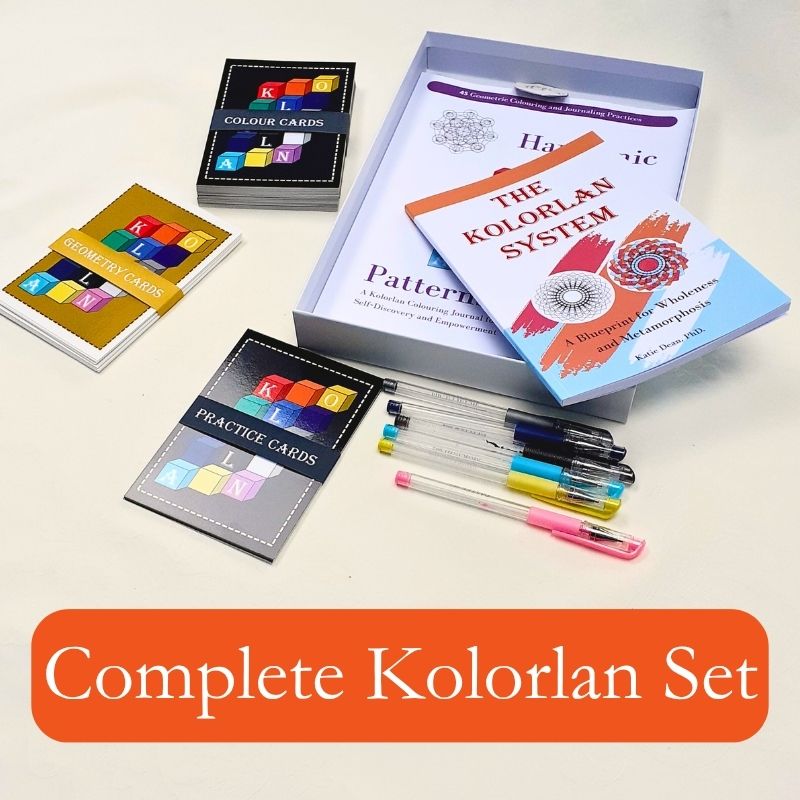
Within the Kolorlan System, I would love to draw your attention to two colours we can connect with when we're exploring this pattern: Orange and Yellow.
Orange can help you connect with and understand your emotions. I see our emotions as information. They can help us to understand ourselves – what we enjoy, what we fear, what we desire, what feels uncomfortable and what seems to bring us alive. So, if you frequently find yourself saying yes and regretting it afterwards, you might choose to spend some time connecting with Orange.
Rather than trying immediately to become better at saying no, you could simply explore:
· What do I feel?
· What do I want?
· What brings me joy?
· What happens inside me when somebody asks something of me?
· What might my resentment be trying to show me?
Orange invites you to discover what is true for you. And once you begin to know what you actually want, another question arises: Can you express it?
This is where Yellow enters the picture. Yellow can support you with confidence, self-esteem and empowerment.
Within Kolorlan, I don't see empowerment as gaining power over somebody else. It is about becoming increasingly able to express your own truth while recognising that other people have their truth too.
Your yes matters too
It would be easy to read an article like this and decide that the goal is to become much better at saying no. That’s not what I’m trying to say: I think the deeper invitation is to become more aware of both answers.
Sometimes you will discover a clear no. Other times you will discover a wholehearted yes. And there are occasions when you may discover something that feels much more complicated: “I don't particularly want to do this, but I've consciously decided that doing it is important to me.”
All of these give you information about yourself. They’re not “right” or “wrong” and they’re not even set in stone – this awareness is more like a set of signposts helping you to align to paths that feel better to experience.
This level of clarity and authenticity helps other people too: When you have a friend who has the capacity to say “no”, then their “yes” becomes so much more meaningful.
And if you are willing to lean into the idea that the outer world can act as a mirror for our inner landscape, then this practice of being authentic with others is also assisting you in becoming more authentic with yourself. When you know that you are allowed to say no, your yes can stop being an automatic response and become something you genuinely choose.
So, next time somebody asks, “Could you just…?” perhaps you don't need to give a reactive answer. Just pause before saying yes or no. Give yourself a moment to become curious about what your authentic answer really is.